Friday, January 14, 2011

Yummy Yammy Soup

I made a version of this soup last week but I didn't record my recipe. Well - there was no recipe - it was another of my "create a soup with what's available" endeavors. It was quite tasty, and I am going to attempt to re-create - and hopefully improve upon it.

Last time I pureed the soup with my hand blender, some bits of the celery string were present. This always bothers me when I use celery in a pureed soup. So this time attempted  to "de-string" the celery with a vegetable peeler to improve upon the texture. It seemed to work!

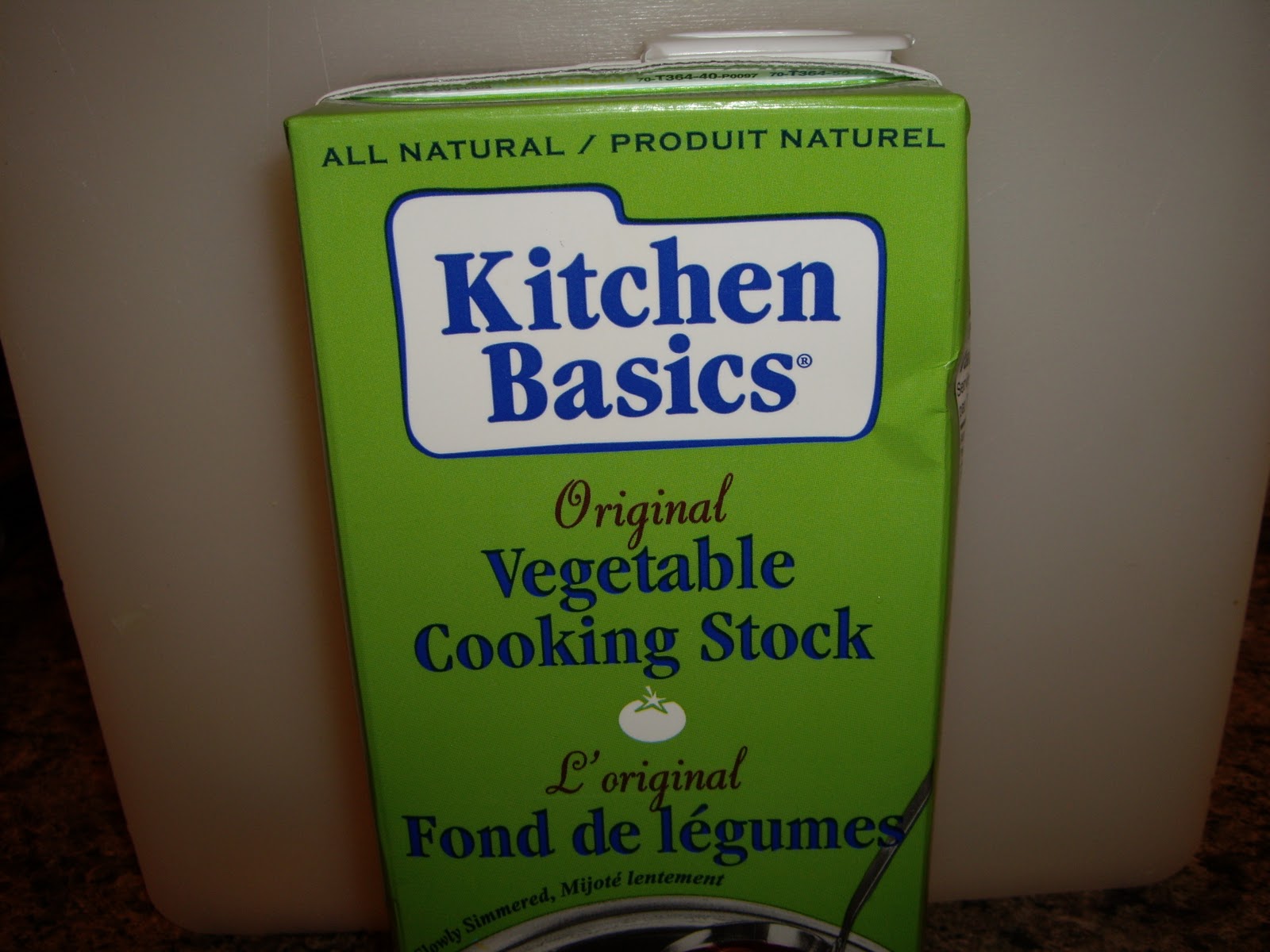
My preferred store bought vegetable stock is a brand called "Kitchen Basics"® .
 It has less salt that most other brands (230g/serving), no MSG,  no glutens, and the salt it does have is sea salt. And I recently found a "No added salt" version which I have yet to try. Not today, though!


Yummy Yammy Soup


1 large yam, peeled and cubed
3 large carrots, peeled and cut into chunks
3 stalks of celery, strings peeled away and chopped
1 large chopped onion (or 3 medium leeks, white part - thoroughly cleaned and sliced)
4 cloves garlic, crushed
1 tbsp. cooking oil
1 quart or litre of vegetable stock
2 tsp. dried thyme
Fresh pepper
Pinch of kosher salt - or to taste if you're not worried about too much salt
Chopped fresh dill for garnish

1. Soften the onion and celery in oil. Sprinkle with salt and fresh pepper. Add garlic, carrots, yam and continue to cook for 10 minutes.
2. Add thyme and vegetable stock. bring to a boil, then reduce heat and simmer for 25 - 30 minutes . Check carrot and yam for softness and cook a little longer if necessary.
3. Cool mixture for a little while, then puree with a hand blender.
4. Add chopped fresh dill and serve!

This recipe made about 7 cups of soup.
I swore I would never be one to  puree soups because they seem not to be as filling as soups that have the chunks of vegetable intact, but I am finding that not to be the case! And the added bonus is being able to camouflage all sorts of vegetables from your refrigerator drawer in your soup for added nutritional punch!

Now that Weight Watchers® has moved to the Points Plus® Program, I have not determined the points value per cup - but I'm estimating that each cup contains at least half a cup of pureed sweet potato, which counts as 2 points. All the other ingredients are 0 points. The oil adds barely .5 of a point to each serving.
Paired with a nice salad and a roll, it makes a lovely Weight Watcher® friendly lunch.

Tuesday, December 28, 2010

Cabbage Rolls like my Mother Used to Make - Vegetarian


When I crave the taste of cabbage rolls,or holubchi,  I make the lazy version - as outlined in an earlier blog. For special occasions I will make the authentic kind - rice actually rolled into cabbage leaves and simmered in a low oven for several hours. This is the kind my late mother used to make. Only hers were dainty and petite and of uniform size. Mine - not!

They are picky and time consuming to make so it is a rare occasion indeed that I deign to make them. On Dec.25th we were going to my nephews home for dinner, so I volunteered to make cabbage rolls to take along.

The pickiest part is preparing the cabbage for rolling. I use the steamer basket of my stock pot to prepare the cabbage. I get an early start so there's plenty of time to get each stage done.
Because the job tends to be messy and wet, I like to spread a nice clean towel on my work surface and get started. I'll be using the towel to separate the cabbage leaves from the head and allow them to cool on it.

Cabbage Rolls


1 med. cabbage
2 cups long grain rice
1 large onion
3 tbsp. vegetable oil
2 cans tomato soup


Stage 1: Preparing the cabbage


1. Cut the hard bottom off the cabbage and make slits around the base of the core. This is to allow steam to get in and make the leaves easier to remove. Remove any imperfect outer leaves and save. Wash thoroughly.

2. Place the cabbage in the steamer basket , core side down, and allow to steam for a good 10 minutes before checking to see if the outer leaves can be easily removed. After 10 minuted, remove steamer basket. You should be able to remove a few of the outer leaves. I got 5 on the first go and that seems to be all I could get per round of steaming.

They must come off the cabbage easily and be removed without tearing. As soon as you feel resistance, it's time to put the cabbage back into the steamer for more steaming. Deepen the slits around the core - being careful not to cut too deep in order not to damage leaves. You may have to cut away a little more at the base of the leaves in order to free it from the cabbage with each removal round.
 Continue with this process until all leaves of a size that will be suitable for rolling have been removed. The closer you get to the inside of the cabbage, the thicker the leaves. Return the loose leaves to the steamer for several minutes to soften. They'll collapse into the steamer and lose stiffness.
Trim the thick center ribs as thin as possible without making a hole in the cabbage.


Stage 2: Preparing the Rice

1. Partially cook the rice. Normally water to rice is a 2:1 ratio. For par-cooking, I use a 1:1.
2. Saute onion in vegetable oil until soft.
3. Combine onion, remaining oil, rice, salt and pepper and allow to cool so that it can be handled.

Stage 3: Rolling, rolling, rolling.....

1. Place a spoonful of rice on each leaf, and roll.Tuck in the side edges as you go.

2. Place into a roasting pan that has been sprayed with vegetable spray and lined with remaining leaves that were too small to use for rolling or with the outer leaves that were removed earlier. (If no leaves are available, not to worry!)
3. Salt and pepper each layer.
4. Dilute 2 cans of tomato soup with 1-1/2 cans of water, mix well, and pour over the cabbage rolls.
5. Cover with foil or remaining leaves and roaster lid and bake for 3 hours at 325°. Check to make sure cabbage is done, and increase cooking time if necessary.

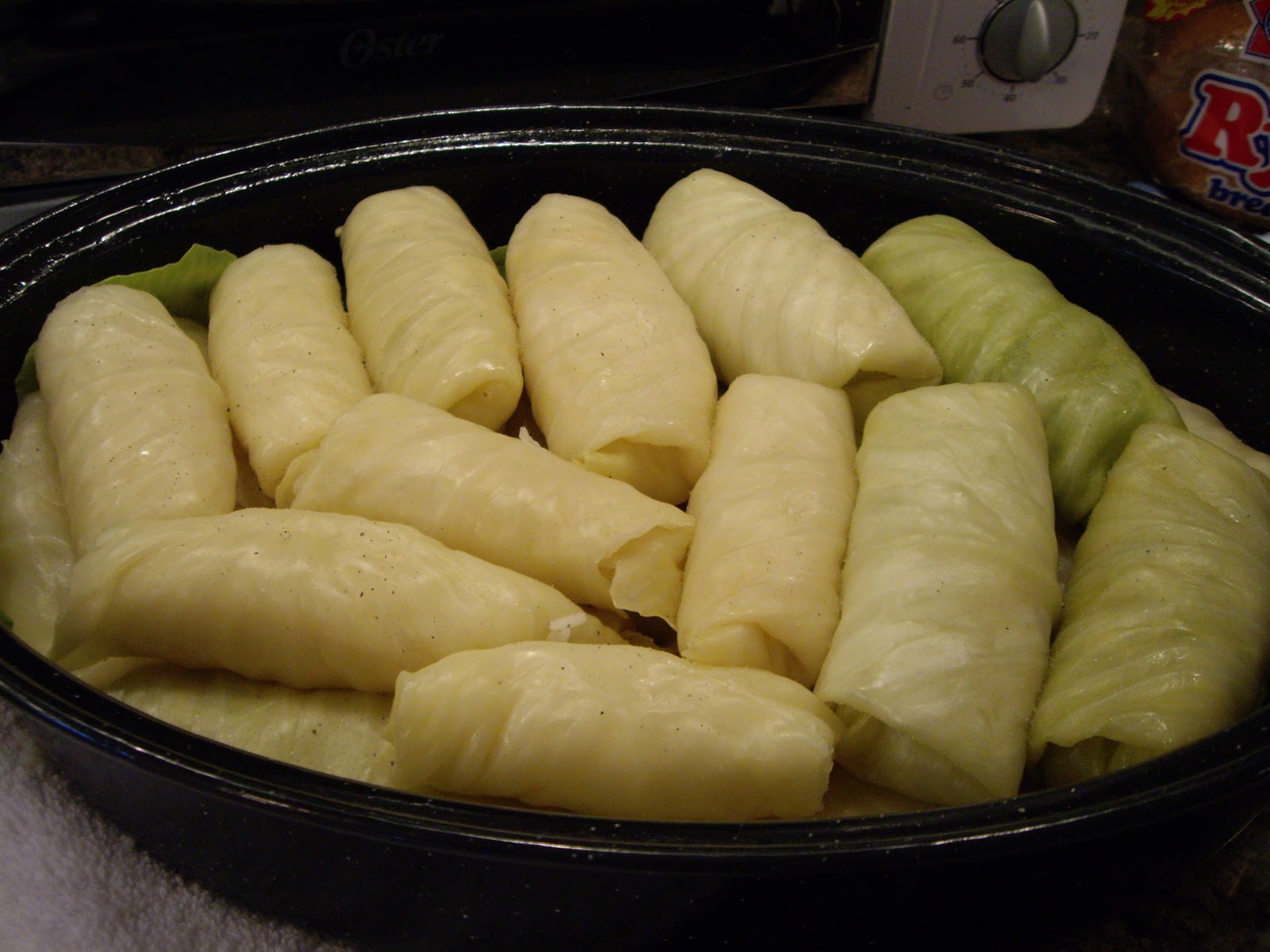
Alas, they were gone too quickly and I neglected to get a picture of the cabbage rolls once cooked.

I'm told that I can save a lot of hassle preparing the leaves if I freeze the head of cabbage, and thaw before rolling. Then I can eliminate the steaming step. I have not tried this, but I will for the next time. It will certainly make the preparation a much quicker process!

Sunday, December 19, 2010

And yet another Bran Muffin Recipe


This is another recipe that originated from the little cookbook "Just Muffins®" compiled by Gaye Hansen. My recipe, however, bears little resemblance to the original which was titled "Delicious Bran Muffins".
Once again, I dip into my frozen banana stash. It also allows me to use up the yogurt (plain or fruit) that is a few days past its prime. I think it's the cinnamon and nutmeg that make these muffins so appealing. They are currently my favorite bran muffins. They smell wonderful while baking and taste yummy warm or cold! To cut back on the sugar, I substitute half of it with Splenda®.

'Bran'ana Muffins


1 cup yogurt (plain or flavored) or 1 cup buttermilk
1 cup natural bran flakes
1/4 cup vegetable oil
2 eggs
1/2 cup brown sugar (or 1/4 cup brown sugar and 1/4 cup Splenda®)
1 cup flour
1/2 tsp. cinnamon (or more if you like it.)
1/4 tsp. nutmeg
1/4 tsp. salt
1 tsp. baking soda
2 mashed bananas
1/2 cup raisins (optional)

1. Soak bran in yogurt (or buttermilk) for 15 minutes.

2. Add the oil and eggs and stir well
3. Add the remaining dry ingredients. (Probably best sifted, but I don't usually bother! Maybe that's a mistake!)
4. Stir in the mashed banana.
5. Spoon into muffin pan that has been sprayed with vegetable spray.
6. Bake at 350 for 25 to 30 minutes. Makes 12 moist,delicious muffins.


These muffins don't keep their height once they cool - and I'm not sure why. Perhaps sifting the dry ingredients would help. Any seasoned bakers out there might know the reason and let me know....
Regardless, they quickly disappear.

In terms of WeightWatcher® points, they work out to approx. 3 points per muffin.


Saturday, December 4, 2010

Potato Latkes - Definitely not low-fat!


At this time of year, all thoughts of watching calories goes out the window. It's Chanukah - and time to enjoy the annual treat of Potato Latkes. My husband and I are crazy for these - and we can easily eat 5 lb. of potatoes worth between us. BAD!!!  Luckily, it's infrequent.

I don't follow a recipe, and so far I haven't had any failures. I did jot down measurements (sort-of) for the purpose of this blog,

 A few things I have learned over the years of making these (and tasting the latkes made by others).
- They taste just as good if you use the food processor to shred instead of doing it by hand. (It took me at least 10 years to learn this one.)
-  Rinsing the shredded potato helps to eliminate the unsightly "greying" caused by the starch exposure to air.
-  Processing the onion in a mini chopper instead of the processor eliminates big chunks of onion in the mix
-  No amount of onion is too much
- Finishing on cooking parchment on cookie sheet in the oven ensures that the latkes are cooked through - and maintains the crispiness

Potato Latkes


5 lb. russet potatoes
3 med. onions - finely chopped in mini-processor
3 eggs, beaten
1/2 cup flour
Salt and pepper to taste
Vegetable oil

1. Peel and shred potatoes in food processor. Coarse or fine shred - your choice.
2. Rinse the starch out of the shredded potato, and press out as much water as possible. I find that this process keeps the potato nice and white. I use the strainer part of my salad spinner, and it works just fine!

3. Process the onions and combine with the potato in a large bowl - big enough to get your hands into for mixing!

4. Add the eggs and flour and mix thoroughly with your hands. (It almost like making bread dough!)

5. Start a couple of large frying pans on med-high heat with a couple tbsp. oil in each. When the oil is hot, make patties out of the potato mixture and gently place in the hot oil to fry. Flatten with a spatula.

Keep an eye on them, and flip when golden. You may have to add a little oil for the second side.
(You also have to keep watch for latke snitchers as the first batch may not make it to the next step.)

6. When golden brown on both sides, transfer the latkes to a cookie sheet lined with cooking parchment and continue by baking in the oven at about 325° while you fry the rest. The timing is not an exact science - and they'll be delicious!

7. Keep on frying until you've used all the potato mixture. You may need more cookie sheets, and employ "FIFO" when serving. (First In - First Out).

8. Enjoy! Serve with sour cream or applesauce. (In my house, ketchup is the condiment of choice).

Saturday, September 25, 2010

Pumpkin - Bran Muffins


I can never follow a recipe straight out. It seems that I always have to make a substitution here or there. Whether it be Splenda® for part of the sugar, or cut back on the oil - or whatever, there is always some variation.
Today's Pumpkin Muffins are no different.

I popped into our neighbourhood Superstore (Loblaws) yesterday, and was greeted by large crates of pumpkins on the way in the door. I was inspired to make something with pumpkin. I love the spices that enhance the flavour, and it seemed like just the thing for a fall day. But did I want to bother with fresh pumpkin? Not today - so I headed for the canned products and bought a can of pure pumpkin.

This recipe is a variation of my Bran-Banana Muffin recipe which is a variation of a Bran Muffin Recipe from my "Just Muffins" booklet by Gaye Hansen. It in no way resembles the original - but served as the springboard for the creation of the new recipe.

Pumpkin Bran Muffins

1 cup Fat Free Yogurt
1 cup bran
1/4 cup vegetable oil
2 eggs
1 cup pumpkin puree
1/3 cup brown sugar
1/3 cup Splenda®
1 cup flour
1 tsp baking soda
1-1/2 tsp. cinnamon
1/2 tsp nutmeg or allspice
1/4 tsp. cloves
1/2 cup raisins (optional)

1. Soak bran in yogurt for 15 min.
2. Add oil, eggs, pumpkin puree and mix well.
3. Add dry ingredients and mix well. Add raisins at the end if using.
4. Spoon into muffin pan which has been sprayed with vegetable spray - or into paper baking cups.
5. Bake at 350 for 25 - 30 min, until toothpick inserted comes out clean.


These make a moist and tasty muffin. The nice thing about the pumpkin puree is that it does not add any point value to the recipe if you are a Weightwatcher®. When I make these again, I will likely bump the spices a bit as they were a little too subtle in the muffins, but on the whole this recipe was a success.
My husband is not a fan of pumpkin recipes, so his opinion is still to come!

I calculate the Weightwatcher® point value to be approx. 3.25 per muffin for this recipe.

Sunday, August 22, 2010

Relish the Thought of Overgrown Cucumbers (or How I lost my Home Canning Virginity!)


My husband and I have just returned from a week in Chicago ( business, unfortunately - not vacation) and my cucumbers used the opportunity to grow into blimps. Giz of  Equal Opportunity Kitchen http://eatfordinner.blogspot.com/ suggested I toss them into the composter, but I didn't have the heart. I nurtured those cucumbers, fertilized them, watered them, provided them with beautiful coloured cages to climb - how could I resort to such an undignified end for their brief lives?

After googling and a bit of research, I decided to try my hand at preserving cucumber relish. I remember the delicious relish my mother used to make when I was a youngster, and wondered if I could pull it off. I have never in the almost 60 years of my life ever canned anything, so this would be a new experience.

Off to Canadian Tire® to buy supplies:


and a book:


Bernardin® are the folks that make the jars. They were the resource I counted  to hold my hand through the process. This recipe is from Bernardin® Guide to Home Canning and makes 6 - 500 ml. jars of relish.

Cucumber Relish


7 cups peeled, finely chopped cucumbers
4 cups finely chopped green pepper
4 cups finely chopped red pepper
2 cups finely chopped celery
1 cup finely chopped onion
1/2 cup pickling salt
2-1/4 cups granulated sugar
3 cups white vinegar
3 tbsp. celery seed
3 tbsp. mustard seed

 1.  Peel the cucumbers and seed them. The recipe I used did not say to seed them, but when using watermelon sized (well, almost) cukes, the seeds are undesirable.

 2. Chop all the vegetables and combine in a large glass or stainless steel bowl. Little did I know that this process would take well over an hour! Once all the vegetables are combined, add the pickling salt, mix well and allow it to sit for 4 hours.


(I found it necessary to alter the recipe. I under bought peppers and over peeled cukes, so my cucumbers took up the slack for my pepper shortfall. Also I had red and yellow peppers and no green ones, so that was another deviation from the original recipe. I'll know in 2 weeks if my changes were a good idea or not. That's the suggested wait time before using the relish in order to allow flavours to blend.)

3. Line a salad spinner basket or sieve with cheesecloth and scoop the relish mixture into it to drain.
Rinse it well and drain several times as it's pretty salty. Very salty! Squeeze out the excess liquid.

4. Combine sugar, vinegar, celery seed and mustard seed in a large stainless steel saucepan. Mix well and bring to a boil. Add the vegetables and return the mixture to a gentle boil for 10 minutes.

Jar preparation:
At some point near the end of the 4 hour wait time, prepare the mason jars for use. The clean jars need to be placed on a rack in a canner and covered with water. Heat the water to a simmer (180° F/82° C.) The snap lids need to be heated also in the same temp water - not boiling. Keep them hot until ready to use. Remove  from the hot water with a jar lifter. Tilt to drain all the hot water out.

5. Ladle the relish mixture into the jar to within 1/2" of the top rim. This is the headspace. Using a non-metallic utensil, poke around in the mixture to remove air bubbles. Wipe the rim of the jar to remove any stickiness and centre the SNAP Lid on the jar. Apply the screw band securely until resistance is met. Do not over tighten.

6. Place the jar in the canner. Repeat with the remaining jars and relish mixture.

7. Cover the canner and bring the hot water to a boil. Process by boiling the filled jars for 15 minutes. Remove jars from boiling water without tilting and cool upright, undisturbed for 24 hours. After cooling, check the jar seals to make sure the lids have sealed properly and curve downward. Remove the screw band, wipe dry and replace. Do not tighten firmly.

8. Label and store in a cool, dark place.

The recipe was supposed to make 6 - 500ml jars. I only got 5 out of it. The way I figure it, with the canner, jar lifter, jars and book I had to purchase to make it, each 500 ml. jar is worth $7.41 not including tax! . (That's not including the  non-cucumber vegetables I purchased.) Maybe Giz's idea to pitch the cukes wasn't such a bad one after all!  I should listen to her more often!


However, my mother would be proud of me if she was here to see it! My first preserves! Ever!  The experience - Priceless!

Sunday, August 8, 2010

Cauliflower-Carrot Soup


This soup doesn't look much different than last week's "Anything you want it to be " soup. Lighter and not green in color - but because it's pureed with a hand blender, it has that same look and texture. I was a holdout against pureed soups - I thought that keeping the vegetable in chunks would make it more filling, but I`m gradually coming around. There`s more of an elegance to them - and you can hide all kinds of nourishing stuff in them and your family will be none the wiser!

This one is really easy - and makes use of minimal fresh ingredients: onion, cauliflower, carrot, dill. Add to that a litre (or quart) of vegetarian stock, some water  and 1 tbsp. vegetable oil and you have a very nice practically ZERO point soup if you are on the Weight Watchers® program.

Cauliflower-Carrot Soup


1 tbsp. vegetable oil
1 large diced onion (1-1/2 cups)
6 cups finely chopped cauliflower
1 cup diced carrot
1 liter (Approx.4 cups) vegetable broth
1 cup water
3/4 - 1 cup fresh dill, loosely packed
fresh pepper

1. In a soup pot, saute the onion in the vegetable oil to soften.
2. Add the cauliflower and carrot and saute a little longer.
3. Add the vegetable broth and water and simmer until the carrot and cauliflower are soft.
4. Add the chopped dill for the last minute of cooking time.
5. Remove from heat and puree with a hand blender.

This recipe makes 8 cups of soup. All items are "point free" except for vegetable oil - which is 3 points for the entire soup.  That's less than 1/2 a point per cup serving.

Options:

- Make the soup creamy by adding 1 cup skim milk. That would bump the point value per cup slightly.
- Instead of dill, season with curry - 2 teaspoons. This should be sauteed with the onions.
- Omit dill and stir in 1 tsp. pesto when serving the soup.
- Omit dill and add a dash of nutmeg when serving.
- Add 1 cup of shredded cheese after pureeing (and the appropriate point value per serving.)